
Wet brick and new stone do not mix
Owners usually notice a chimney leak only once it reaches something they care about: a brown tide line on the plaster beside the fireplace, a musty smell after a storm, or white powder pushing through a painted brick face. In a remodel the stakes rise. Stone veneer, tile and plaster all dislike a damp backing. Thinset loses its grip, plaster blisters, and natural stone darkens and stays dark.
So before Wakeley Chimney Group refaces a hearth in Dana Point, we want the chimney behind it dry. Below is where we look, what the usual repairs cost on our price list, and where a figure has to wait until we have stood on the roof.
How water reaches the inside face
Water has several routes into a masonry chimney, and each one shows up in a different spot indoors.
- Down the flue. An open flue with nothing on top collects rain directly. It pools on the smoke shelf, rusts the damper and seeps into the firebox. Indoors it looks like a damp firebox or a rust streak down the back wall.
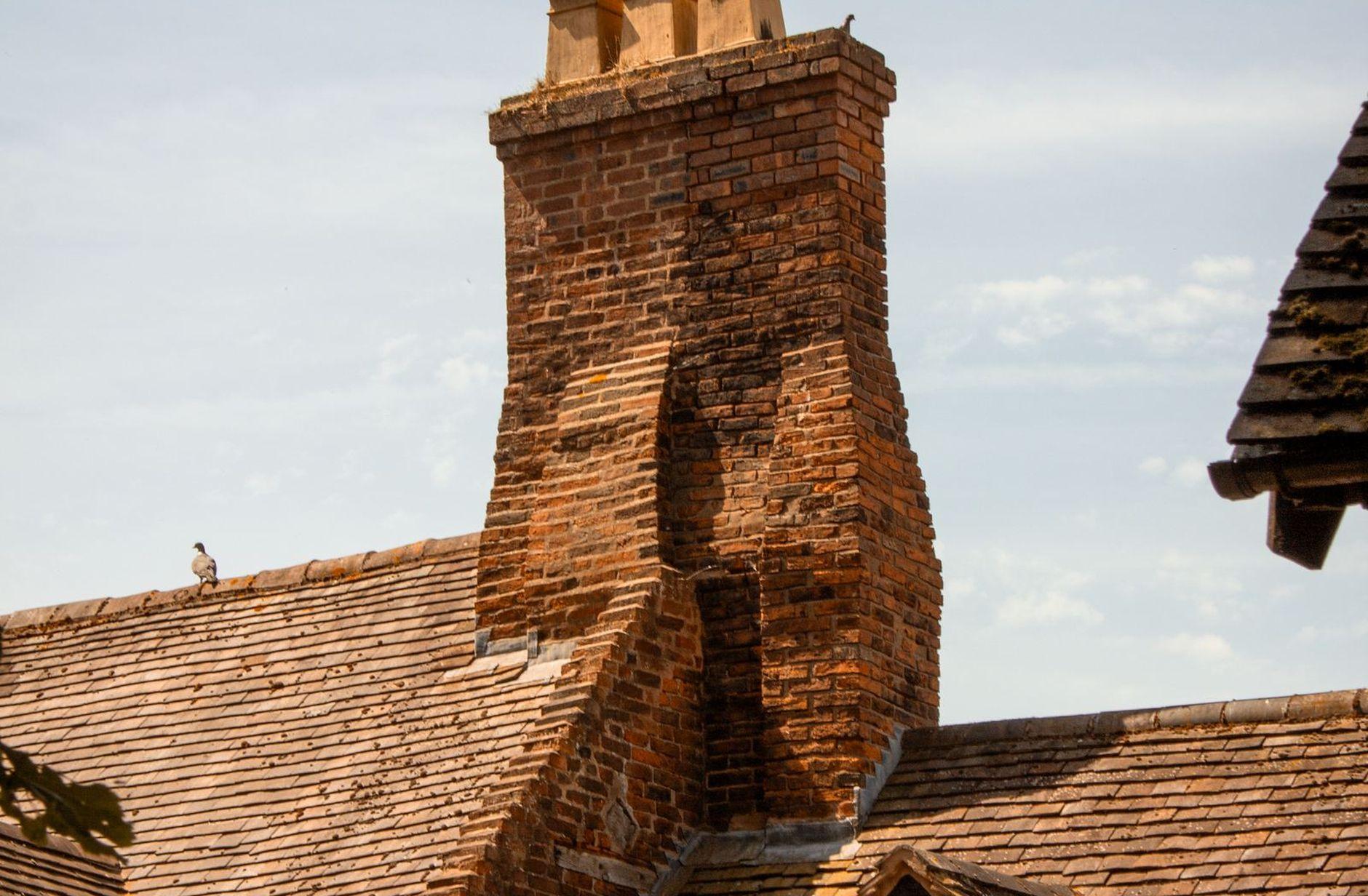
- Through the top. A crumbling crown lets water into the core of the stack. It travels down inside the brick and surfaces as stains on the chimney breast well below the roof.
- Along the roofline. Flashing that has lifted, rusted or been patched only with caulk lets water run down the framing beside the chimney. The stain often lands on the ceiling or upper wall, not on the fireplace itself.
- Through the brick. Old brick and soft mortar drink rain, especially on a face turned to the weather. In a wind-driven storm the inside face can darken within the day.
- Behind a broad stack. A wide chimney set across the slope of the roof acts like a dam. Runoff backs up against it and works into any gap in the flashing.
Why the coast changes the repair
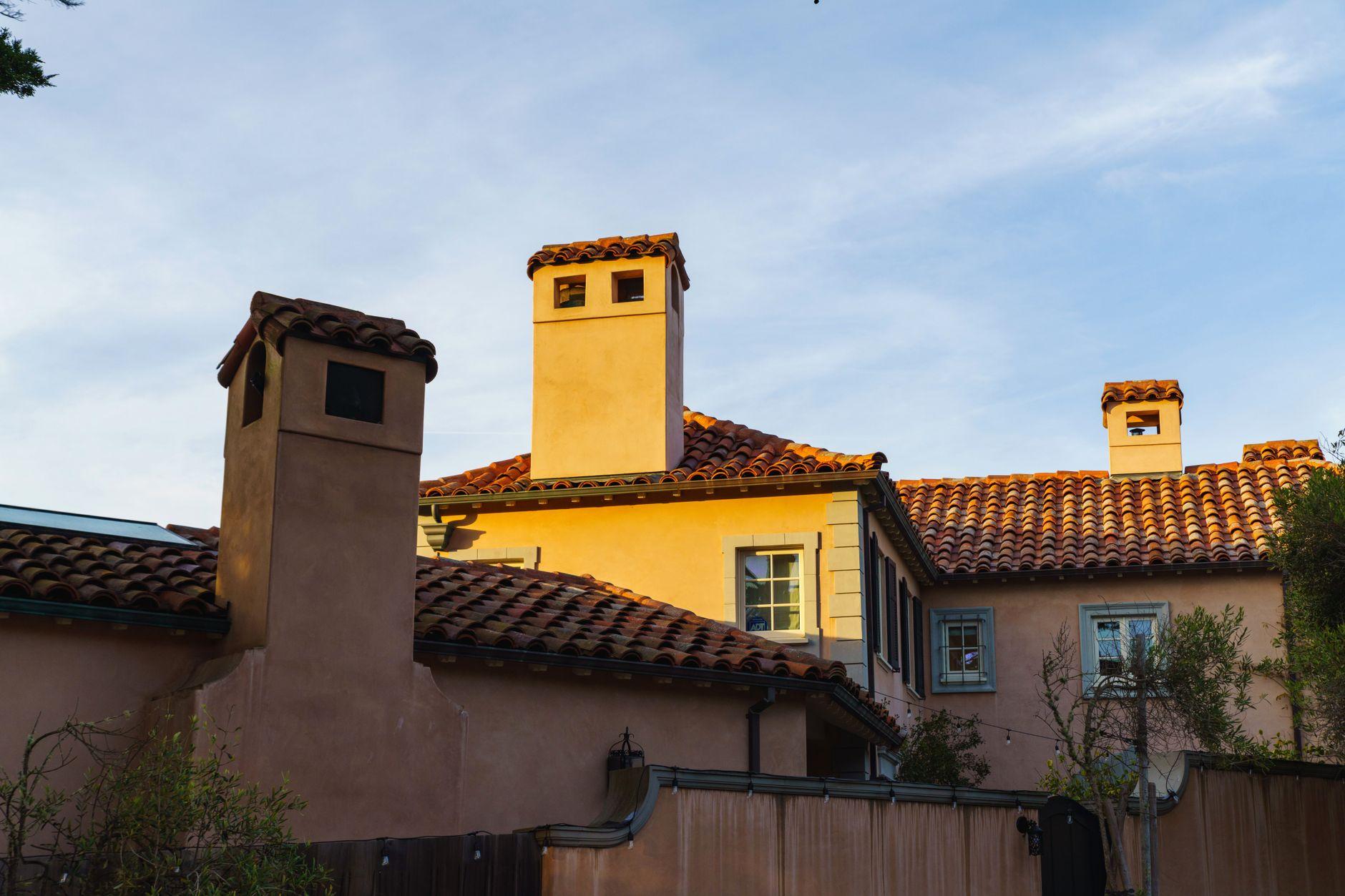
Close to the water, a few things wear faster. Painted steel caps rust through. Galvanized flashing pits. Mortar on the ocean side of a stack erodes sooner than on the sheltered side. We lean toward stainless and copper near the coast, and we match new mortar to the hardness of the old brick so the repair does not crack the faces around it.
Our figures for the usual leak fixes
Some fixes have a figure on our price list. The cap is quoted after we measure. For the rest, we name a figure once we have seen the chimney close up.
| Fix | Our figure |
|---|---|
| Tracking a leak to its source and closing it | $545 to $3,250 |
| A peaked diverter on the high side of a wide stack | $435 to $985 |
| That diverter along with all new step and counter flashing | $655 to $1,600 |
| A cap over the flue, by size and metal | quoted after we measure |
Crown work, water repellent and flashing replaced by itself depend on size and condition, so their figures follow the visit.
The leak range is wide because a leak can have one source or three. A single gap at the flashing sits near the low end. A crown, a cap and a flashing failure on the same chimney sit near the top.
How we trace it
We start on the roof with the crown, cap, flashing, joints and brick face, then go into the attic where the chimney passes through, then indoors to the breast and the firebox. When the source is not obvious, we soak sections of the chimney with a hose in a fixed order, starting low, and note which section brings water through inside.
Once you want a figure, ask for a written leak repair quote. Mention where the stain shows and whether it appears in every rain or only in heavy storms; that narrows the visit.
Water repellent comes last
A repellent is the finishing layer, not the fix. It goes on brick that is already sound, after open joints are repointed and the crown is mended, and it must let vapor escape from the brick so trapped moisture does not flake the faces off. On a chimney facing the ocean it is worth considering for the weather side. Our chimney waterproofing page covers it.
The order of work on a remodel
1. Stop the water at the top: crown, cap, flashing, cricket. 2. Repoint and repair the outside brick. 3. Let the inside face dry out, and check it with a moisture meter. 4. Only then take down the old surround and build the new one.
Refacing over damp brick is the most expensive mistake we see, because the new face has to come off again to reach the cause.
What the new face can do to help
Once the water is stopped, the material choice still matters. A porous stone set tight against a chimney breast on an outside wall will show any future dampness first, which can be useful as an early warning. Glazed porcelain and sealed plaster hide it until it is serious. On walls we know take weather, we tend to suggest a finish that breathes and an access panel or a removable section near the damper handle, so the throat can be checked later without cutting into the new work.
Signs to mention when you get in touch
- A stain that grows after each storm.
- Rust flakes on the damper or the firebox floor.
- White powder on the brick, inside or out.
- Peeling paint on the chimney breast.
- A musty smell from the fireplace in the wet months.
Get the chimney dry first
If your Dana Point fireplace is due for a new face and you have noticed any of the above, the contact page is the place to begin. Tell us where the water appears, and we will set a tracing visit before any tile is ordered. See also our chimney leak repair service and crown, damper and chase repairs.
Weighing This for Your Own Home?
Wakeley Chimney Group measures, brings samples and puts the price in writing before any work starts. We work from Dana Point across Laguna Niguel, San Clemente, Laguna Beach and the rest of Orange County.